

Stats (all QOQ)
Revenue up 8%
Shareholder equity down 39%
Cash and equivalents down 33%
Sales/Marketing expense up 28%
Media Margin1 up 25%
International Revenue up 12%
Assets up 4%
Liabilities up 14%
Five Observations
1. Fluent’s Goodwill Has Zero Value
File this under “not something you see every day”. It’s pretty rare for a company to have zero value for its goodwill on the balance sheet. I mentioned a few weeks ago that Angi recently took a 25% impairment to their Goodwill value, but zero is surprising.
Basically, what Fluent is saying is that all of their value is tied to revenue/profit, and there is no intrinsic value in the brand beyond that.
“As of June 30, 2026 and December 31, 2025, there was no remaining goodwill”
Key Takeaway: The Fluent brand doesn’t hold any value in the market.
2. Fluent Divested Winopoly at a Loss
Fluent acquired a 50% interest in Winopoly in April 2020 for $2.53MM. They fully acquired the company in September 2021 for an additional $7.875MM2. That puts the total price over $10.4MM.
They sold Winopoly to InsureCo for $3MM. Five years after purchase, they sold for less than 30% of the original purchase price.
In the announcement, Fluent says they made the divestiture to focus more on Commerce Media Solutions. That’s a pretty major haircut to sell off a business unit.
In their filings, Fluent reported Winopoly under the line item “Call Solutions”.
“Winopoly is a contact center operation, which serves as a marketplace that matches consumers sourced by Fluent and other third parties with advertiser clients.”
Mention I reached out to Investor Relations to validate the total.
Key Takeaway: Fluent thought it was worth taking a loss on business unit divestiture to focus the business.
3. Fluent is shifting focus from O&O to Commerce Media Solutions
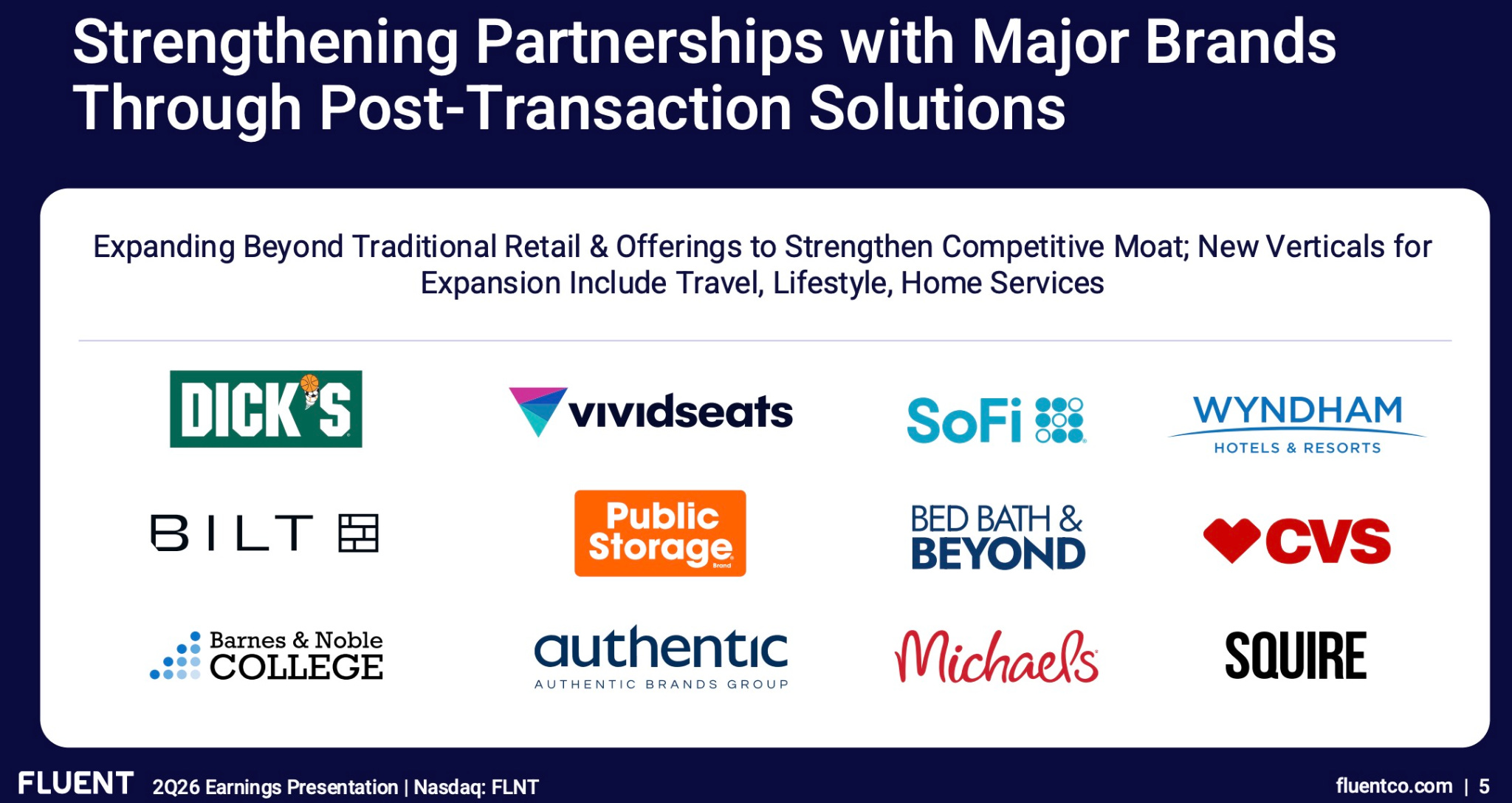
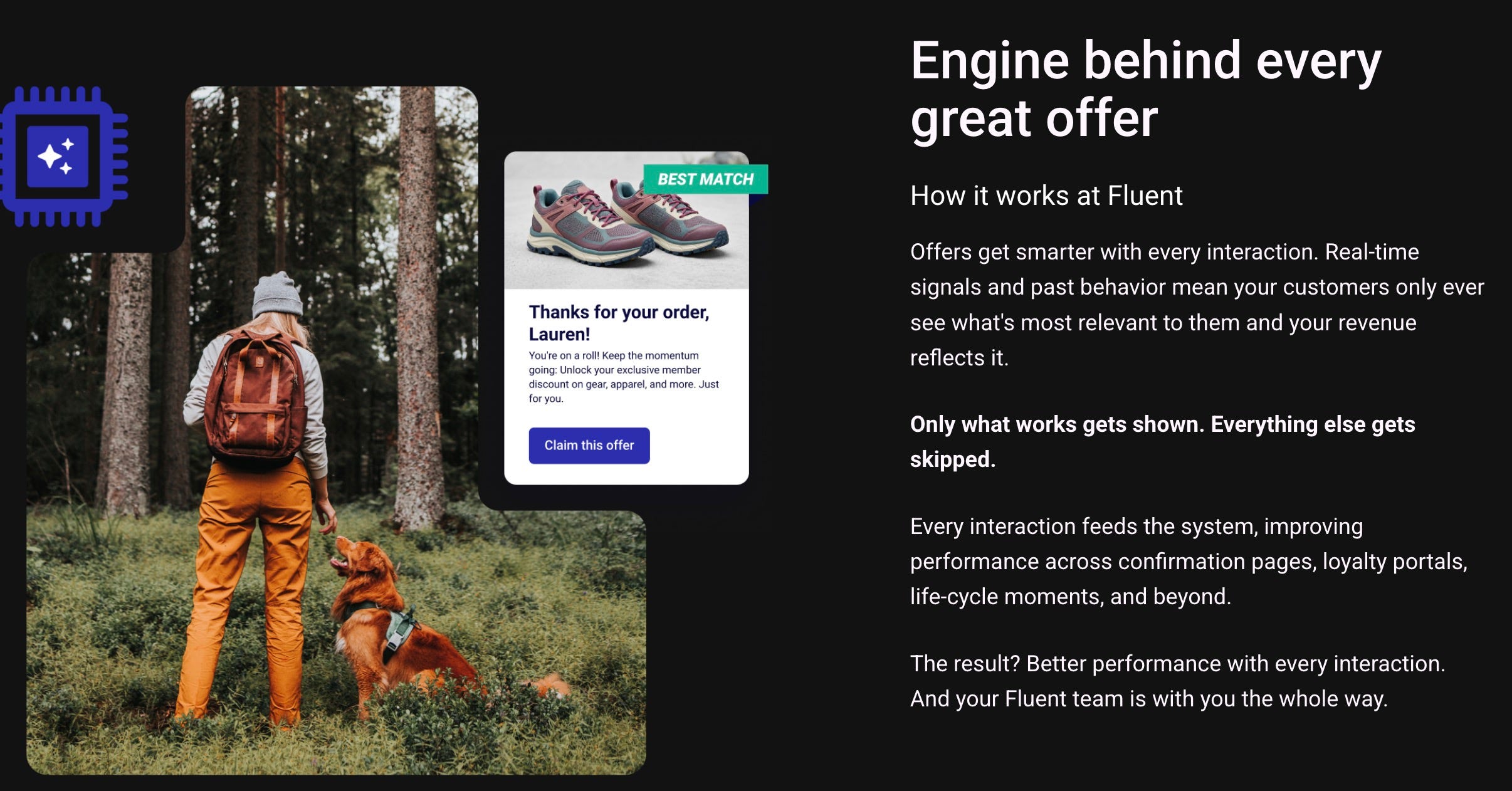
Launched in 2023, Commerce Media Solutions is primarily serving as an adtech middleman, serving ads and powering paths on publisher sites. The growth curve is genuinely impressive in such a short timeframe.
I haven’t used or seen the product, but in the descriptions, it sounds like a competitor to Rokt as a provider of post-sale advertising.
From the 10Q:
“With the difficulties in sourcing traffic for the owned and operated digital media properties (”O&O Sites”), the Company shifted its strategic focus toward scaling its Commerce Media Solutions business. Commerce Media Solutions has demonstrated growth and operates under a different economic model that reduces exposure to certain media sourcing risks. However, it continues to represent an evolving component of the Company’s business and the continued success of Commerce Media Solutions depends on the Company’s ability to continue to onboard and retain media partners, achieve favorable economics under long-term agreements, and maintain advertiser demand, of which there can be no assurance.”
Key Takeaway: Fluent has shifted its primary focus to providing adtech.
4. Fluent is still recovering from their FTC Issues
In 2023, the FTC ordered Fluent to pay a $2.5MM civil penalty. Fluent cites this is a challenge to maintaining traffic.
“In recent years, however, we experienced challenges maintaining traffic volume to our O&O Sites due to changes in our ad serving and media sourcing standards following the Federal Trade Commission (”FTC”) inquiry. We have since taken steps to diversify our traffic sources and expandvour ad network beyond our O&O Sites, including the strategic transition to our Commerce Media Solutions business.”
From the FTC:
“Under a proposed order, Fluent will be required to pay a $2.5 million civil penalty and be banned from engaging in, assisting, or facilitating robocalls. It also limits lead generation on Fluent’s job websites to email marketing and prohibits Fluent from misrepresenting any material facts about rewards, job opportunities, or the collection and sale of consumers’ personal information. The order also requires Fluent to establish systems to monitor its own advertising and that of its affiliates and comply with comprehensive disclosure requirements related to the collection of consumers’ consent to the sale of their information. Finally, the order requires Fluent to delete all previously collected consumer information.”
Just to take a step back, prior to the FTC issues, Fluent’s peak revenue was over $361MM
in 2022. Things have obviously changed since then, and they’re rebuilding under new circumstances. In 2025, their total annual revenue was $209MM.
Key Takeaway: Fluent’s business has been radically transformed since their FTC civil penalty.
5. Fluent Cites a History of Not Meeting Forecasts
I’ve honestly never seen this before in an SEC filing. Fluent specifically mentions that they have a track record of not hitting their own forecasts.
From the 10-Q:
“Based on the Company’s forecast, management expects to have sufficient liquidity over the next twelve months from the date of filing. However, the Company does have a history of not meeting its forecast and any substantial deviations from such forecasts could adversely affect the Company’s liquidity and ability to access funding.”
Key Takeaway: Fluent didn’t provide guidance for Q3, but did say they expect double-digit growth.
A primer on Fluent
I imagine some of our readers may not be familiar, so I wanted to give a quick overview. Founded in 2010, Fluent originally started as a co-registration path (this blog has a decent, though fairly negative overview of what that is). They’ve diversified into other media and technology areas and made several acquisitions, including Q-Interactive, AdParlor, and others.
Going Public Timeline
2015: IDI acquired Fluent.
2016: IDI changed its name to Cogint
March 2018: Cogint spun off its analytics & risk management into a company called Red Violet
April 2018: Cogint rebrands as Fluent and goes public on the Nasdaq.

A note on Media Margin. Most companies don’t report this, but it is an interesting metric.
“Media margin is defined as that portion of gross profit (exclusive of depreciation and amortization) reflecting variable costs paid for media and related expenses and excluding non-media cost of revenue and one-time items. Gross profit (exclusive of depreciation and amortization) represents revenue minus cost of revenue (exclusive of depreciation and amortization). Media margin is also presented as a percentage of revenue.”
A portion of the initial investment was an earnout, and the later purchase included a mix of cash and stock.